Skip to project story
Selected works Archive · 09 / 11 Next project

iDAC 2025 · Interactive installation · One-week build

ReflectedConnections.

A circuit that only closes
when people do.

Context
Architecture exhibition
Theme
Social engagement in public space
Role
Concept advocacy, design + electronics
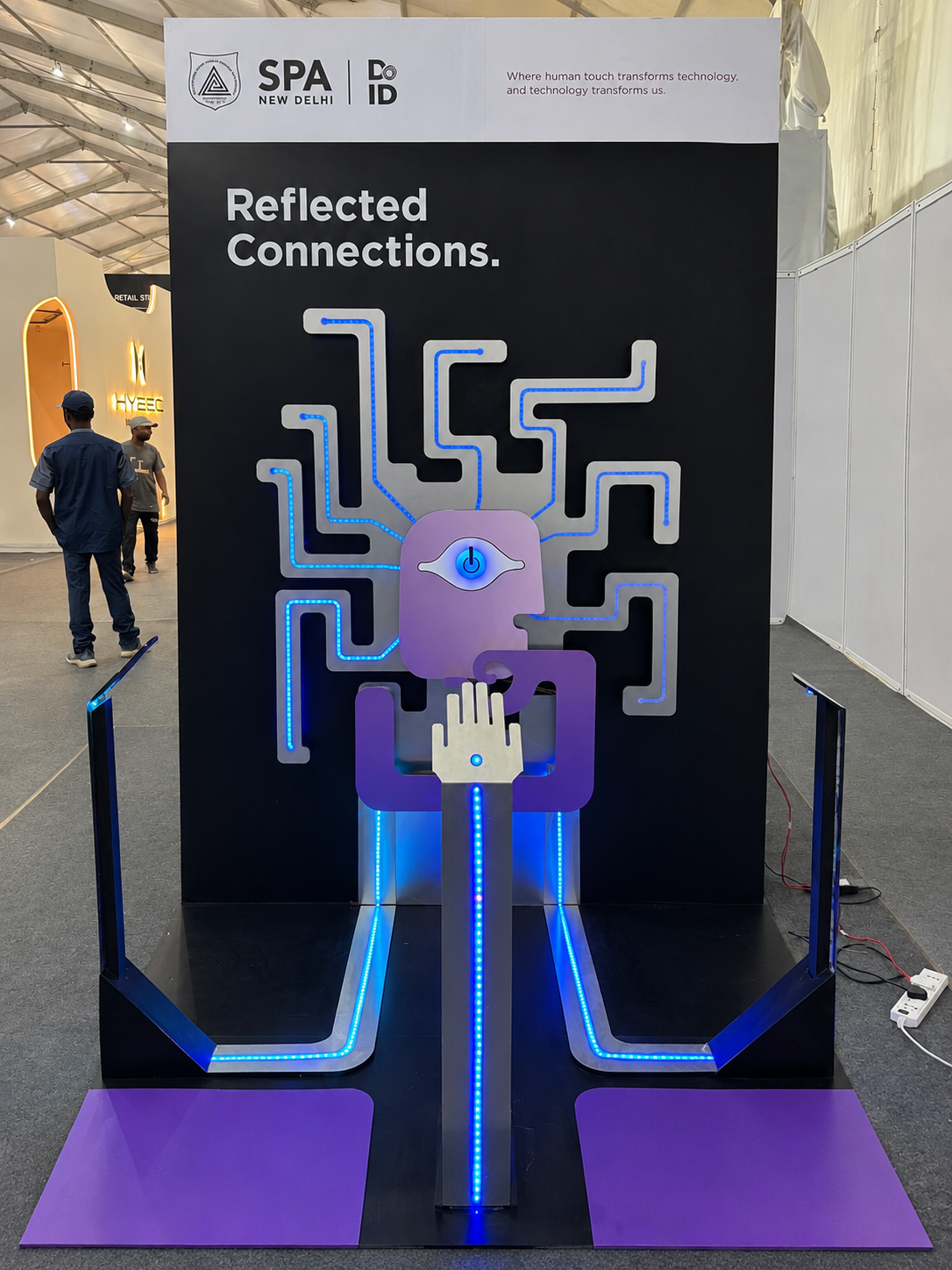
Reflected Connections installation illuminated in blue at the iDAC exhibition
Final installationiDAC · 2025
Complete the circuit

01 / The opportunity

A small exhibition space. One week. One social question.

Could an object make
strangers meet?

Our batch was given a small space at iDAC while we were studying ways to improve social engagement in public settings. A classroom discussion quickly became an opportunity to test that question with real visitors.

The proposal was ambitious for the time available. I pushed for us to commit to it, then helped carry the idea from design through fabrication, electronics and exhibition setup. We had seven days to make the encounter real.

Brief, rewritten

Do not ask people to look.
Give them a reason to connect.
02 / The invitation

Curiosity before instruction

First, it looks
back at you.

The central eye catches attention. LED light travels through the branching “hair,” making the wall feel alive before a visitor understands what it does.

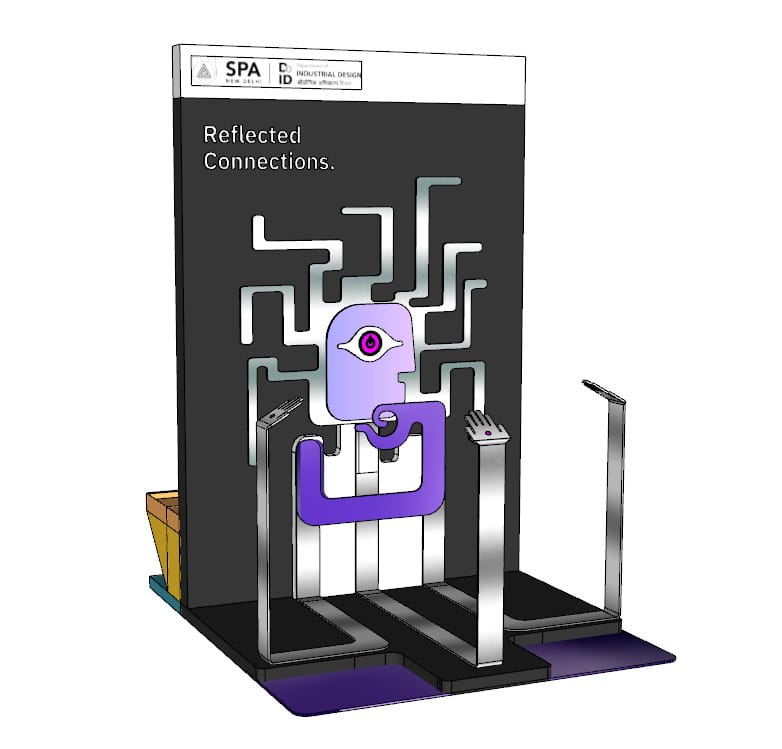
Early 3D concept for Reflected Connections showing the central eye, branching light paths and three hand poles
Initial spatial concept
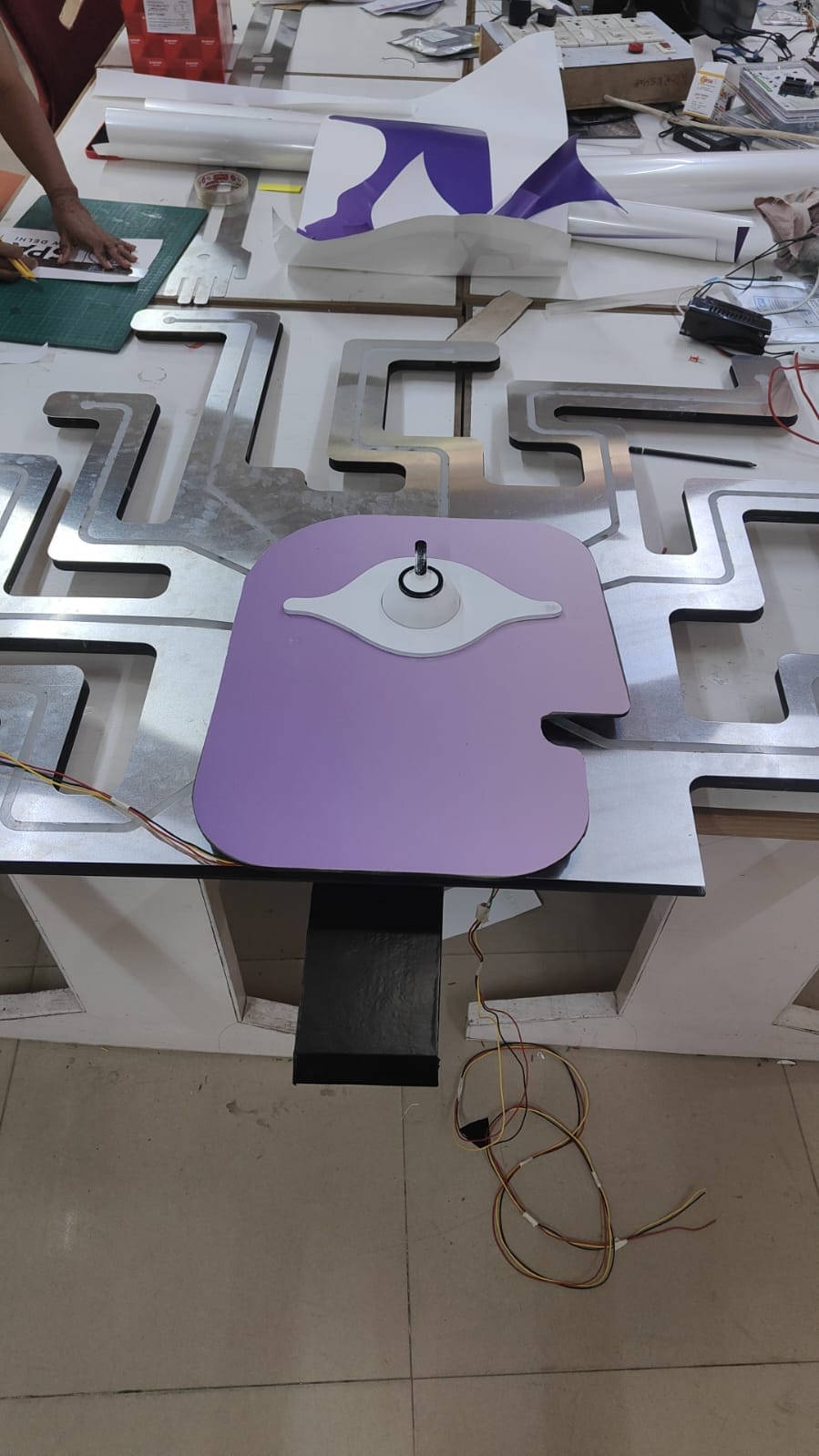
Central purple eye component being assembled over the branching metal face
The eye / visual invitation

03 / The interaction

The human chain is the switch

Touch one pole.
Find another person.

  1. 01Reach

    A visitor places a hand on one of three conductive poles.

  2. 02Join

    Another person touches a different pole. The circuit remains open until they hold hands.

  3. 03Complete

    The joined bodies close the connection and the installation responds with flowing light.

In useConnection becomes a shared event.
Inviting visitors into the interaction
Reflected Connections at iDAC 2025

04 / The proof

One circuit.
Seventeen people.

The connection was not limited to a pair. We tested a chain of seventeen people holding hands, and the installation still responded. What began as a technical test became the clearest demonstration of the idea: the system grew stronger as a social moment when more people entered it.

17-person testHuman chain · Circuit complete

05 / One week to make it real

Learning the electronics by building them

Designed in days.
Working by opening time.

I came to the project from architecture, not electronics. The installation was still unreliable close to exhibition time, so I worked through the night—testing connections, tracing failures and learning what the circuit needed as I went. It worked when the doors opened.

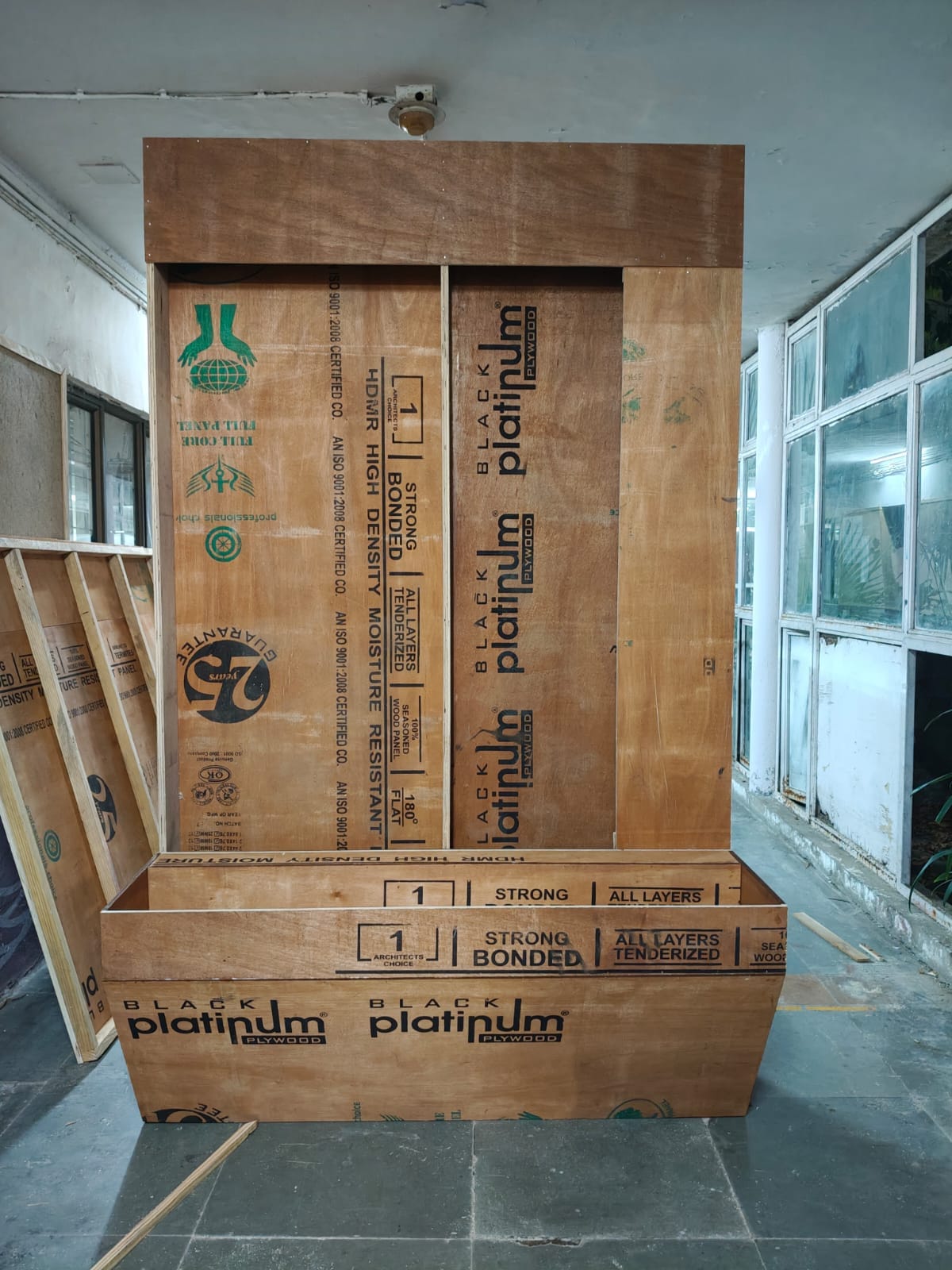
Plywood backing and base structure for Reflected Connections under construction
01 / Structural shell
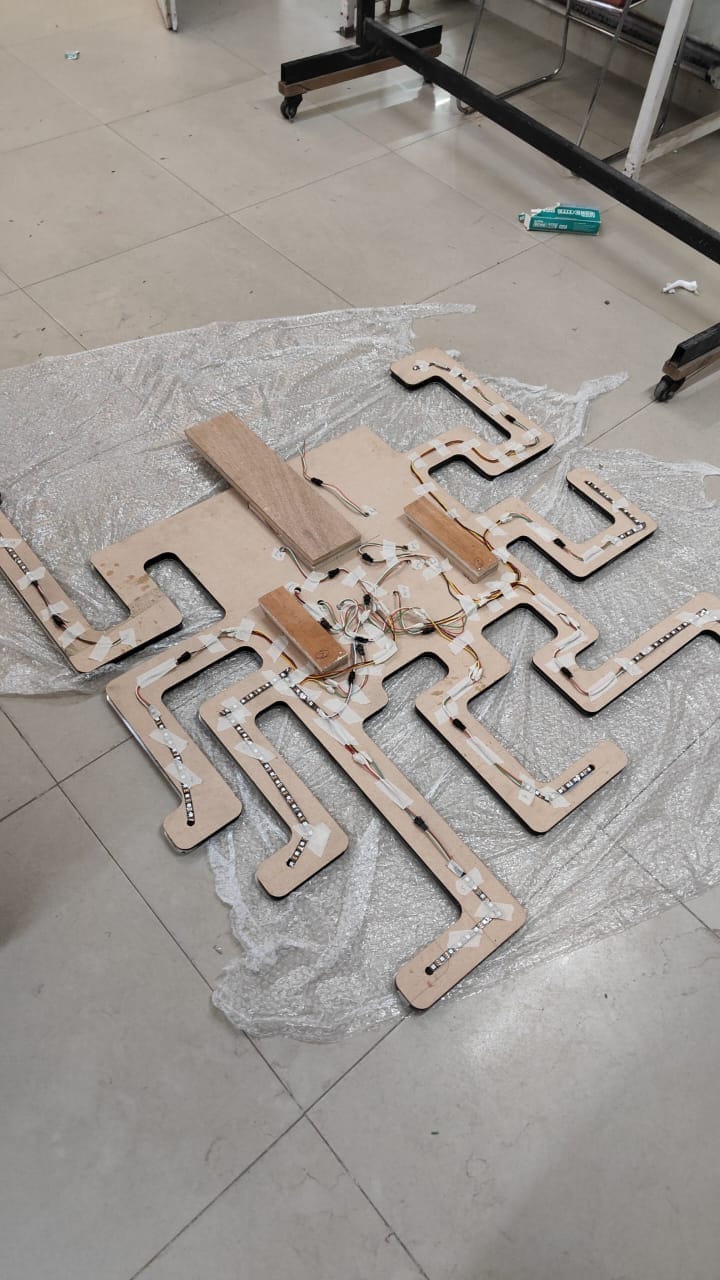
Reverse side of the branching hair component with LED strips and wiring in progress
02 / LED routing
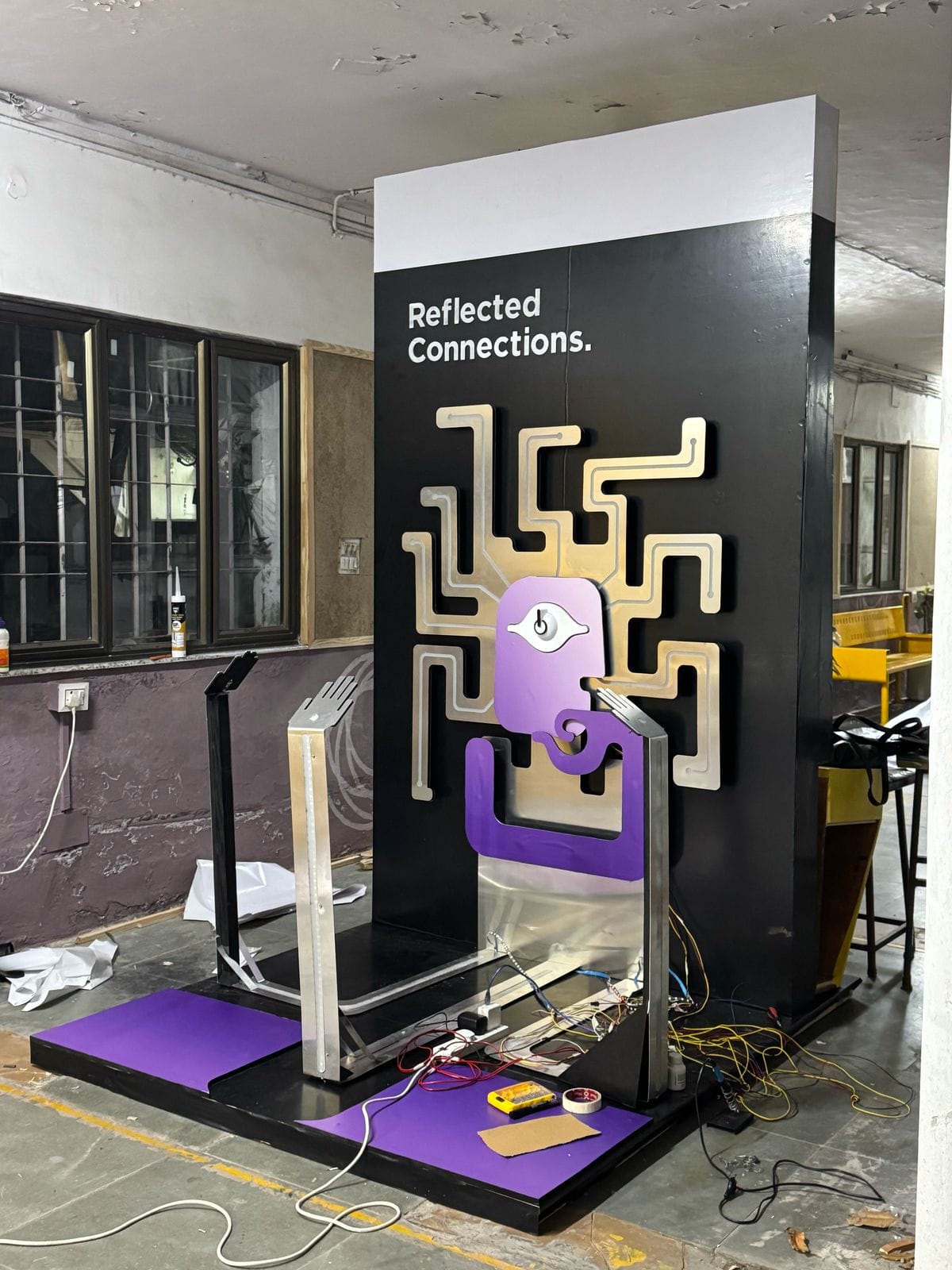
Reflected Connections assembled at college with exposed wiring during testing
03 / Integration at college
04 / Troubleshooting the electronics Silent

06 / What the exhibition returned

The object attracted attention.
The circuit turned it into participation.

Visitors stopped, experimented, called others over and formed groups around the installation. Reflected Connections achieved what we set out to test: a public object can provoke collective activity when its feedback depends on people acting together.

Timeframe
7 days
Largest test
17 people
Output
Full-scale interactive exhibit
Learning
Electronics through prototyping
Next archive project · 10 / 11CARRYOpen the study